Phones for Friends
Solo Initiative
2 Months
Figma, Illustrator, Photoshop, Rhino
Overview
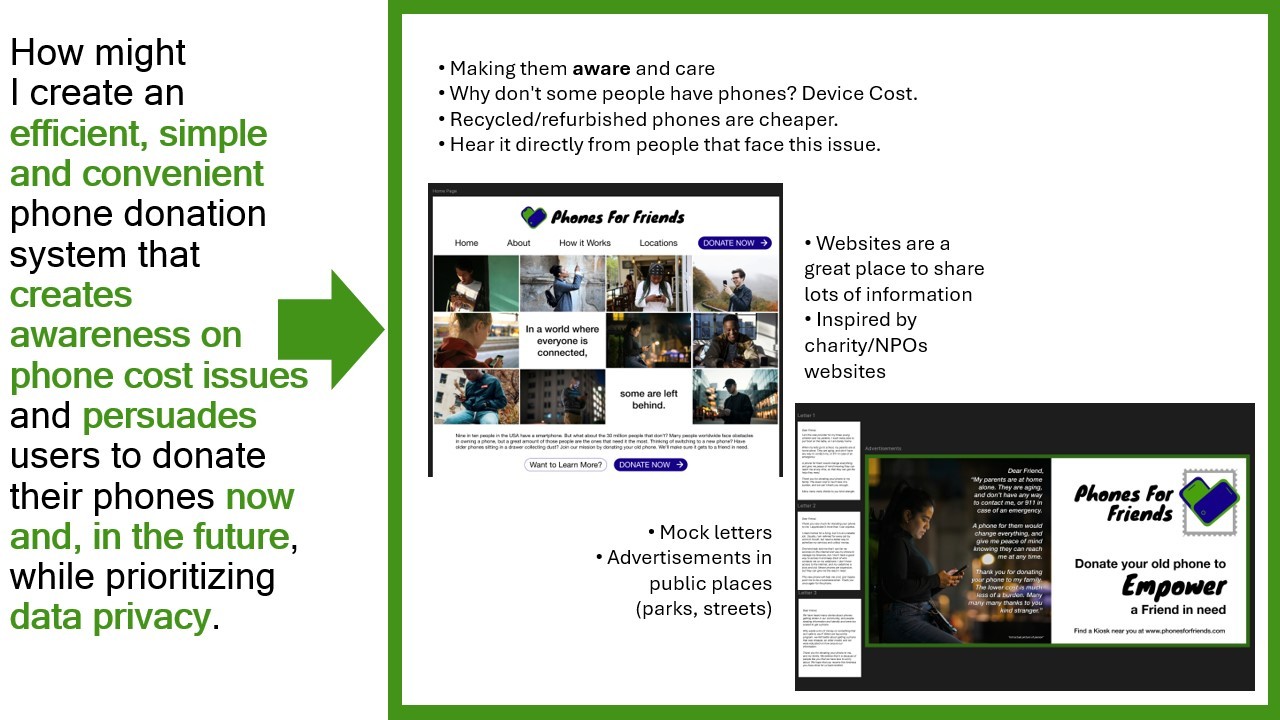
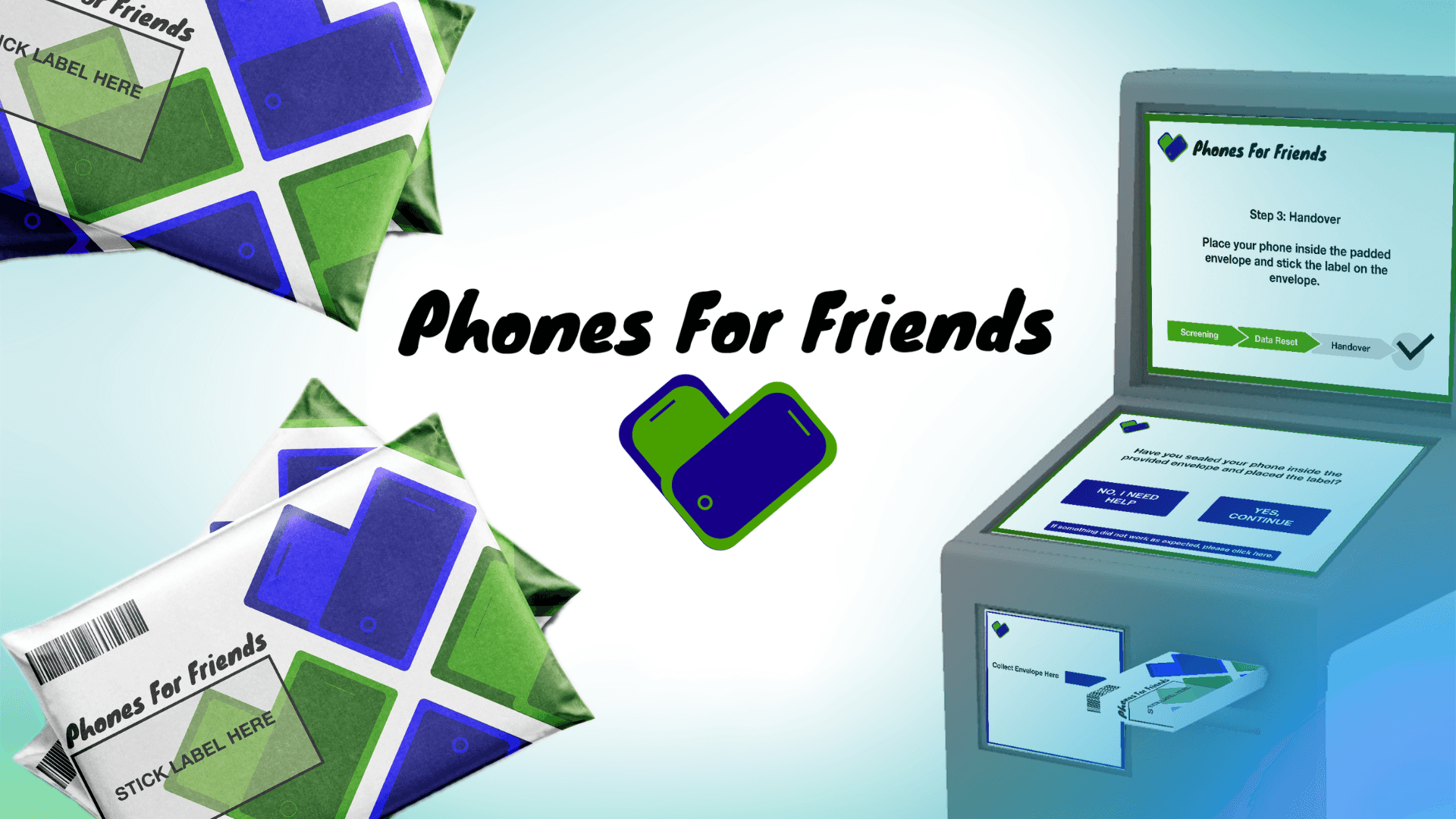
A phone recycling system concept, with a website protoype, branding & advertisements, and a physical kiosk design for donating old phones to be recycled to lower phone costs for those in need.
Context
Phones, when not disposed of properly, pose significant environmental issues, consume energy, and enable intensive mining processes to manufacture new phones. Recycling and repurposing old phones can not only save the environment but also benefit a friend in need.
Problem
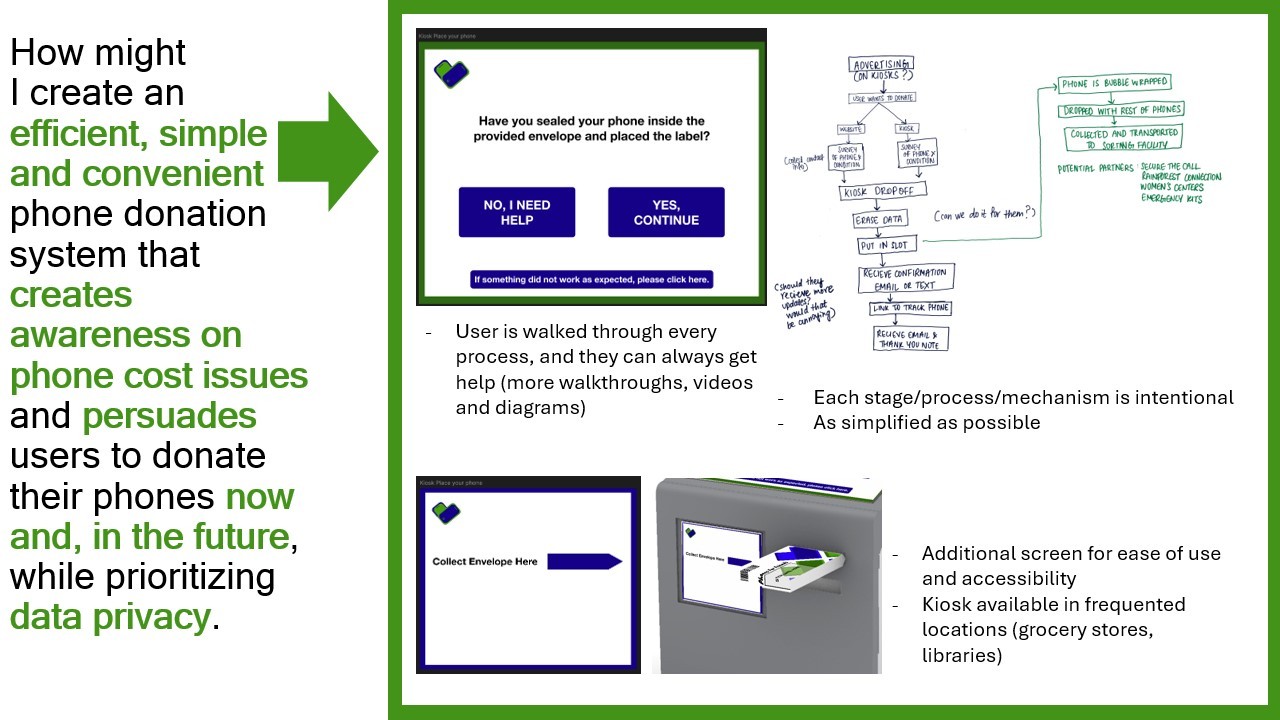
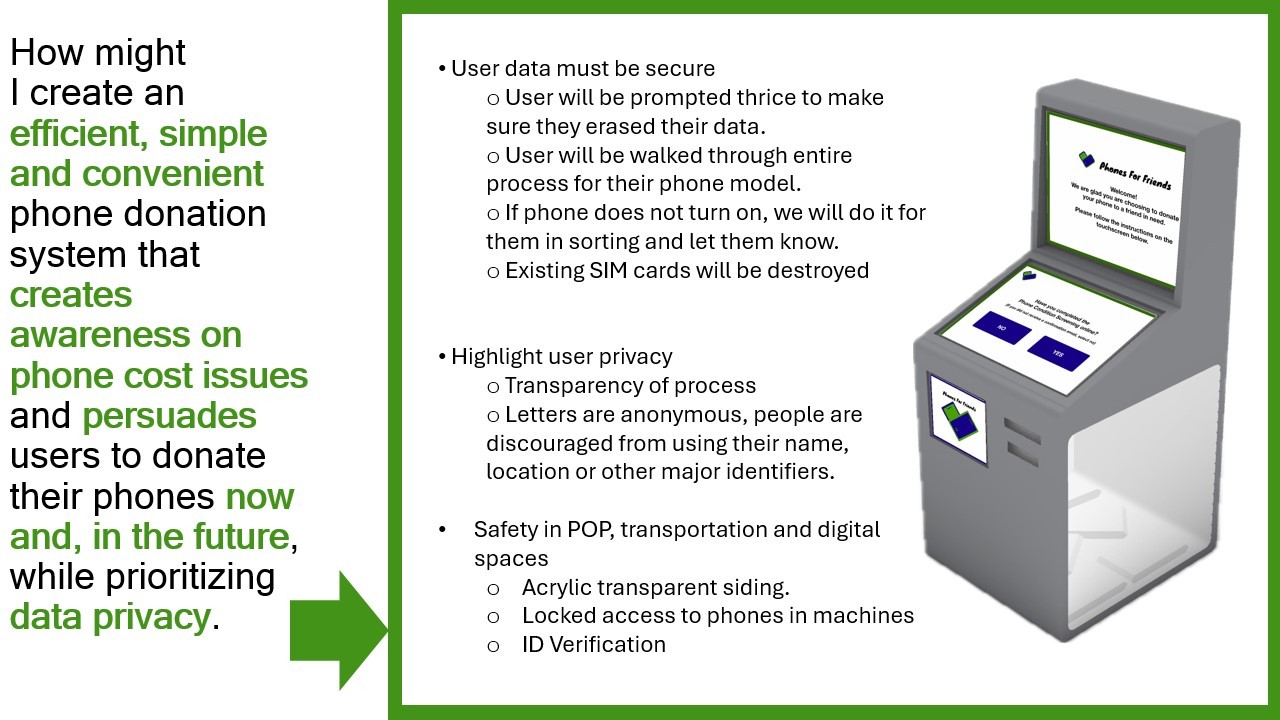
How can I design an efficient, simple, and convenient phone donation system that raises awareness about phone cost issues and persuades users to donate their phones now and in the future, while prioritizing data privacy?
Approach
I focused on addressing 5 priorities that came up in my initial research.
What is a priority to meet stakeholder needs? | Why is it important? | How was it addressed in the design? |
|---|---|---|
Creating Awareness | Make the user care enough to donate |
|
Simplicity and Convenience | If the solution is easy to use and easy to access, we minimize reasons not to donate |
|
Efficiency | Each stage/process/mechanism is intentional for a smooth process |
|
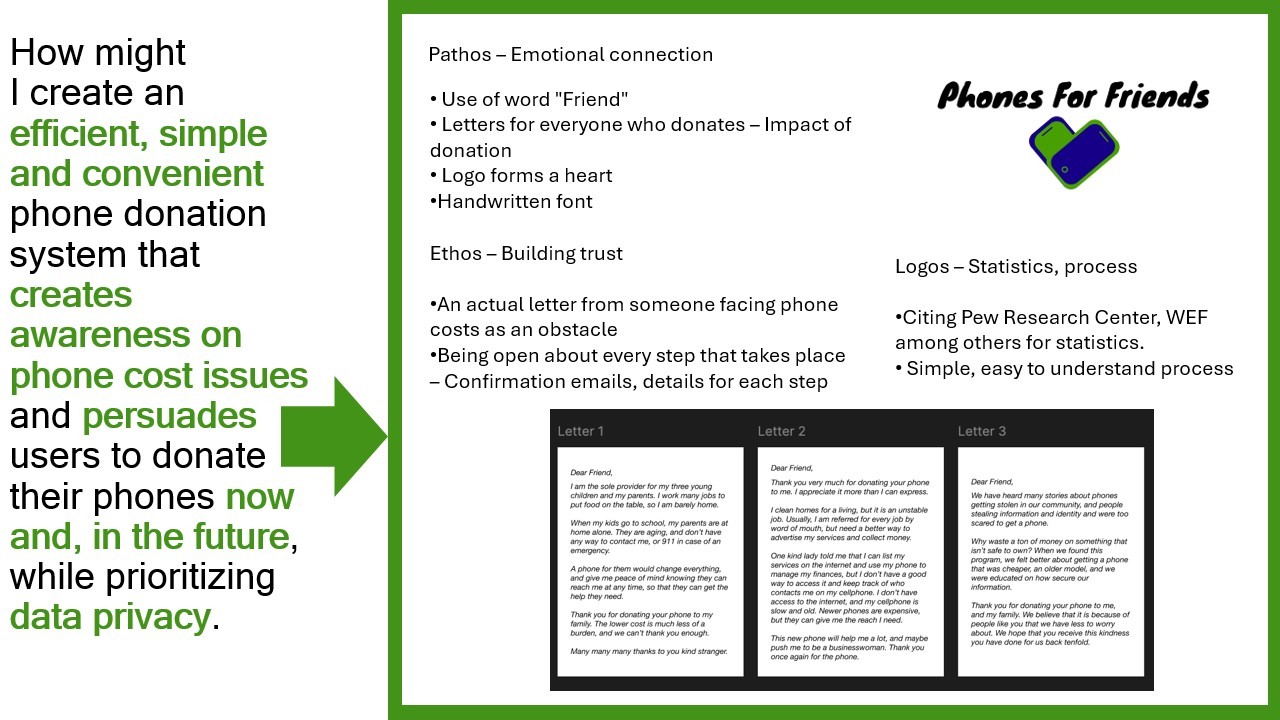
Persuasion | Ethos, Be trustworthy; Pathos, Get the user emotionally invested; Logos, show numbers to convince. |
|
Security | User data must be secure. Safety of devices in points of contact and transportation. |
|
Solution
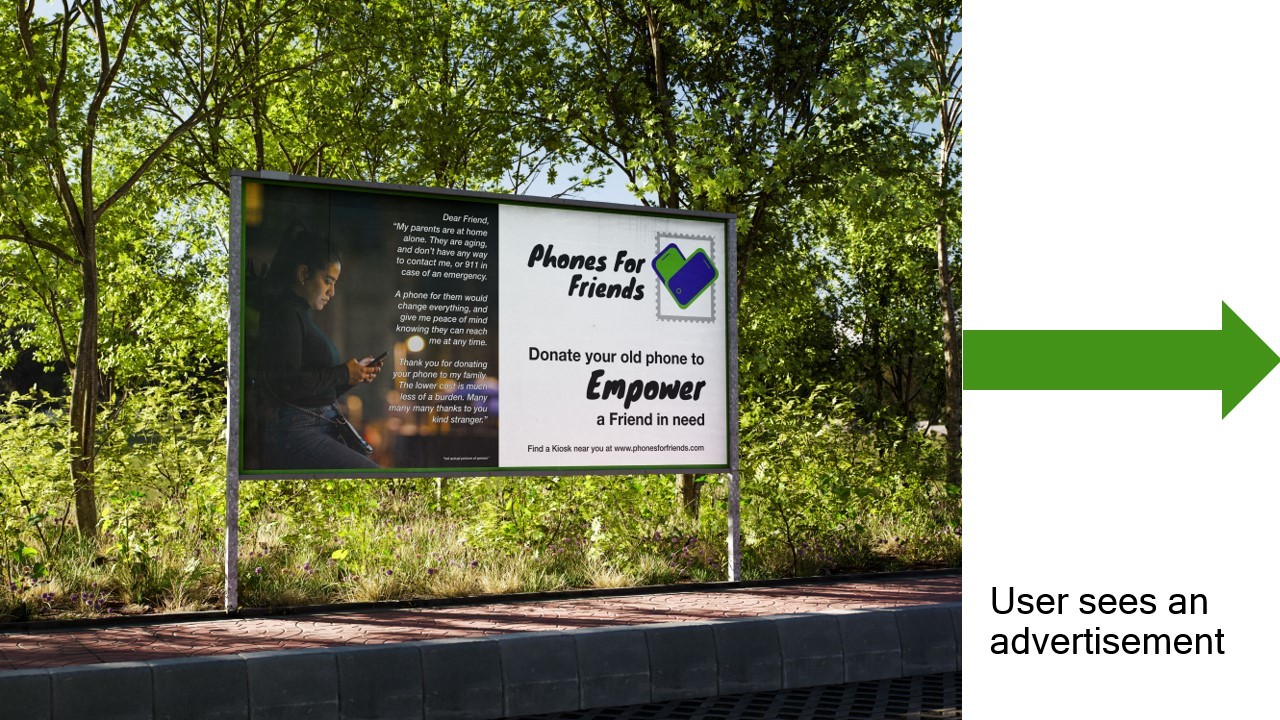
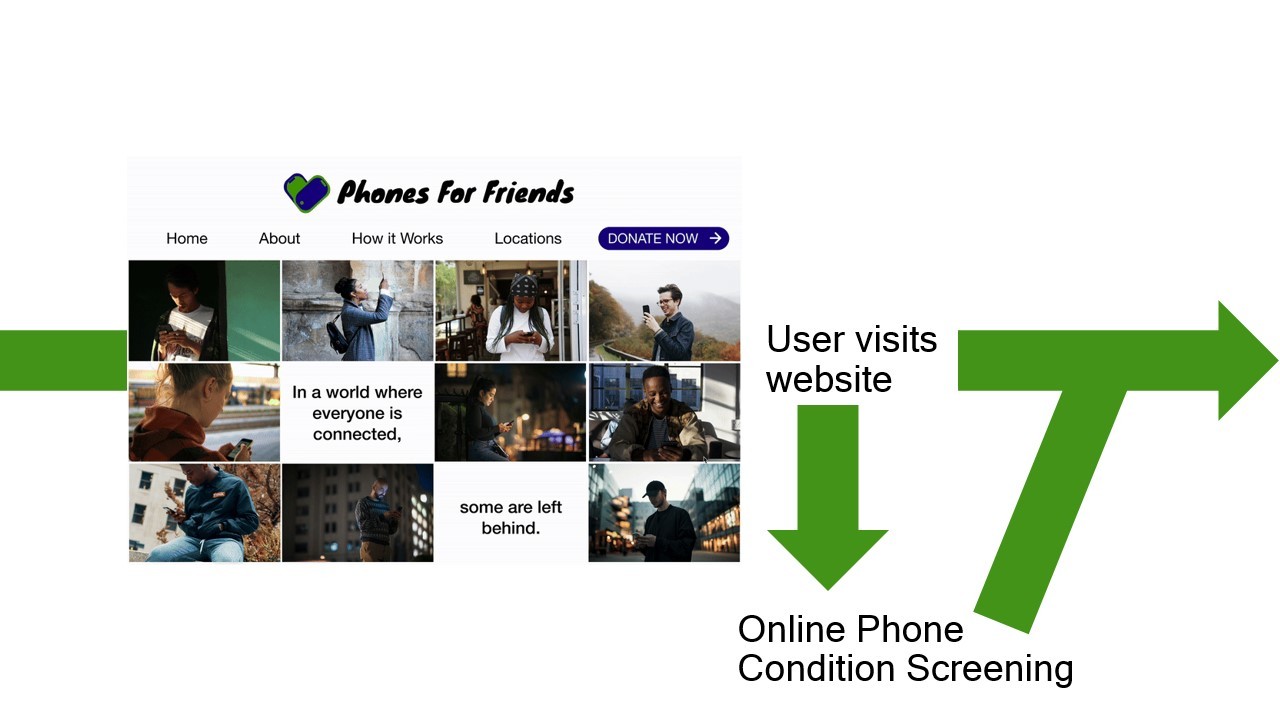
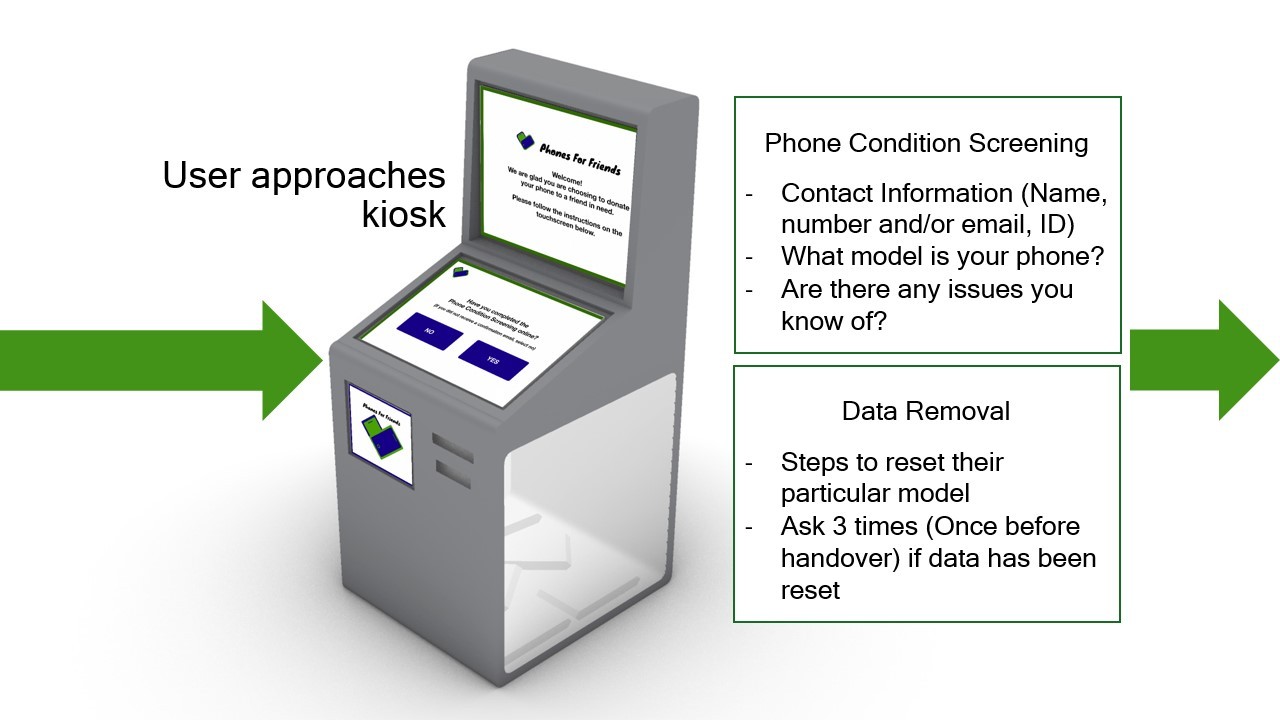
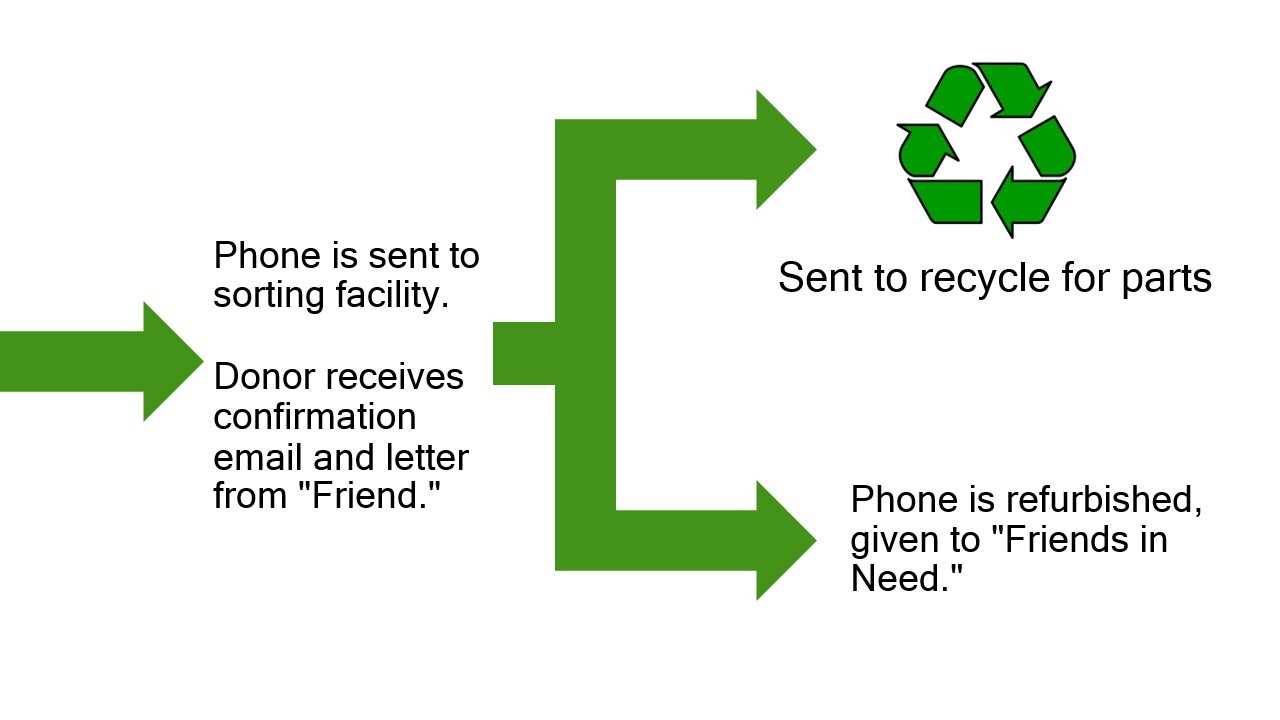
A system design, from first contact with a user, then leading to a website, all the way through the phone recycling journey.
Context
Context
Phones, when not disposed of properly, pose significant environmental issues, consume energy, and enable intensive mining processes to manufacture new phones. Recycling and repurposing old phones can not only save the environment but also benefit a friend in need.
Problem
How can I design an efficient, simple, and convenient phone donation system that raises awareness about phone cost issues and persuades users to donate their phones now and in the future, while prioritizing data privacy?
Approach
I focused on addressing 5 priorities that came up in my initial research.
What is a priority to meet stakeholder needs? | Why is it important? | How was it addressed in the design? |
|---|---|---|
Creating Awareness | Make the user care enough to donate |
|
Simplicity and Convenience | If the solution is easy to use and easy to access, we minimize reasons not to donate |
|
Efficiency | Each stage/process/mechanism is intentional for a smooth process |
|
Persuasion | Ethos, Be trustworthy; Pathos, Get the user emotionally invested; Logos, show numbers to convince. |
|
Security | User data must be secure. Safety of devices in points of contact and transportation. |
|
Solution
A system design, from first contact with a user, then leading to a website, all the way through the phone recycling journey.